
Resilient by Design
A Strategic Guide to the Past, Present, and Future of Performance Marketing
Are you still treating affiliate marketing like a simple discount channel? It is time to evolve.
For a long time, affiliate marketing was viewed as the "problem child" of digital marketing—a messy mix of coupon sites, questionable tactics, and last-click attribution. But over the last two decades, the channel has quietly grown up.
Today, affiliate marketing is no longer a siloed tactic. It has transformed into a highly resilient, full-funnel commercial framework. From upper-funnel content creators and Connected TV ads to mid-funnel loyalty programs and lower-funnel closers, the "pay for performance" model is actively shaping the future of digital commerce.
Whether you are trying to diversify your partner mix, navigate the death of last-click attribution, or protect your marketing ROI during an economic downturn, this comprehensive guide provides the blueprint.
Prefer to read offline?
There is a lot of strategic ground to cover here. If you're short on time and would rather save it for later, read it on your commute, or easily share it with your team, we've got you covered.

Prologue
Affiliate's First Decade
Affiliate marketing didn’t begin as a buzzword at a conference or as a slide in a CMO’s budget deck. It began in 1996 with an experiment by Amazon. The idea was as simple as it was disruptive: give anyone with a website a way to earn money by linking to products. If a visitor clicked and bought, Amazon would pay a commission. No impressions. No guesses. No wasted spend. It was a model built on accountability—pay only when something meaningful happens.
Other networks quickly followed. LinkShare, Commission Junction, BeFree, and Performics emerged to connect advertisers and publishers at scale. Suddenly, small blogs and niche sites could generate real revenue. Travel companies, retailers, and subscription services began to see affiliate not just as a side experiment but as a growing line item. It was one of the internet’s earliest waves of marketing democratization: anyone could become a publisher, and brands only paid for outcomes.
Rapid growth brought challenges. Some affiliates manipulated systems with cookie stuffing, adware, and brand-bidding abuse. Fraud dented trust and gave the channel a reputation problem that would take years to unwind. At the same time, coupon and loyalty sites rose to dominance. They delivered conversions reliably and were easy to measure, so they became the public face of affiliate. But this dominance created a dependency on discounts and last-click credit… incrementality rarely got measured, and margins felt the strain.
Amid this landscape, JEBCommerce was founded in 2004 by Jamie Birch. As one of the early affiliate-specialized agencies, JEBCommerce leaned into strategy, transparency, and integrity—proving programs didn’t have to be messy to scale. Those early agency years were about educating brands that affiliate could be professionalized and made accountable.
By 2007, affiliate was thriving yet misunderstood. It had scaled globally, built entire categories of publishers, and proven the viability of pay-for-performance. It also carried baggage: lingering fraud stories, discount dependency, and skepticism from executives. Still, the core idea—pay for outcomes, not inputs—was too valuable to ignore.
As industry veterans often reflect, affiliate was the scrappy underdog: messy at times, misunderstood often, but fundamentally sound. The next decade would test whether the channel could grow up, diversify beyond coupons, and earn a permanent seat at the marketing table.
My own path didn’t start here. I began in digital marketing in 2010 and joined JEBCommerce in 2020. But understanding this first decade—and how JEBCommerce took root within it—sets the stage for what comes next.
Chapter 1
Affiliate Marketing’s Reputation Problem (2008–2012)
When I first began paying attention to affiliate marketing in the late 2000s, the channel carried a label it couldn’t shake: the problem child of digital marketing. Ask a C-suite what “affiliate” meant and you’d hear the same list: coupon sites, questionable tactics, maybe a side of fraud. It was the channel you tolerated—not the one you bragged about in a board meeting.
Yet even as skepticism lingered, affiliate was demonstrating something powerful: accountability. It paid for outcomes and could be tuned to deliver efficient revenue. The tension between suspicion and performance defined this era.
The Reputation Issue
The early years left scars. Even as networks cracked down on cookie stuffing, adware, and trademark hijacking, the stories persisted. Meanwhile, coupon and loyalty partners dominated. They were elite closers—but not always creators of demand. Finance leaders asked the hard questions: Would these sales have happened anyway? Are we paying margin for non-incremental orders? With last-click attribution as the norm, the case for incrementality was tough to make.
Industry snapshots from the time repeatedly showed more than half of program spend flowing to coupon, cashback, and loyalty affiliates. Content publishers were growing but secondary. Influencers (as we think of them now) had not yet arrived in force. For many executives, affiliate looked like a discount machine, not a strategy.
The JEBCommerce Context
This is the environment where JEBCommerce, under founder Jamie Birch, built its name. From 2004 onward, the agency leaned into the very tools required to fix the reputation problem: rigorous partner vetting, compliance, transparent reporting, and proactive optimization. JEBCommerce’s position was simple: affiliate can be clean, profitable, and strategic—if you manage it with intention.
By the time I joined the agency in 2020, that culture was well established. But in the early 2010s, it was still being forged—often one audit, one policy, and one skeptical CFO conversation at a time.
Why Brands Were Skeptical
Fraud memories were fresh. Even a small number of bad actors can color perception.
Discount dependency looked risky. Coupons drove conversions, but didn’t always introduce new customers.
Attribution was primitive. Last-click gave a tidy answer but didn’t reflect the messy reality of multi-touch journeys.

If I had a dollar for every time a CFO asked, “Aren’t we just paying for sales that would have happened anyway?” I could fund a surprisingly large sneaker habit. The instinct is fair. The answer is better program design.
Stories from the Field
One common scenario: the bloated application backlog. Programs would launch and collect hundreds of affiliate applications—then freeze. Teams lacked a framework to separate valuable partners from risky ones, so approvals stalled and performance stagnated.
Our first move was always the same: clean house. Build a scoring rubric. Enforce compliance and brand guidelines. Approve strategically. Suddenly, a program that looked chaotic started to take shape. With a clearer partner mix and rules of the road, leadership could see where affiliate fit and how it could scale safely.
Conversations also changed. Instead of debating whether affiliate was “good or bad,” we focused on what outcomes we wanted—new-to-file customers, AOV targets, LTV lift—and aligned incentives accordingly.
Early Signs of Change
Even in this era, we saw glimmers of diversification. Content publishers were gaining traction. Paid search affiliates began experimenting with complementary bidding strategies. Closed benefit networks and employee portals hinted at new models. The pieces of a broader, multi-touch ecosystem were falling into place, even if most programs still leaned heavily on coupons.
Lessons We Learned
- Transparency wins trust. Show who partners are and how they add value.
- Balance matters. A program over-indexed on discounts is fragile.
- Education is ongoing. Stakeholders need the “why,” not just the “what.”
Rebuilding Trust in Affiliate
- Audit partners. Identify compliance risks and remove them.
- Diversify. Add at least a couple of non-coupon partners to change the mix and mindset.
- Enforce policies. FTC disclosures and brand usage aren’t optional.
- Measure incrementality. Track new-to-file, AOV, and LTV—not just last-click orders.
- Narrate the data. Tell the performance story in terms that matter to finance and the C-suite.
Affiliate’s reputation didn’t turn on a dime, but this foundation—cleaner partner bases, clearer incentives, and better storytelling—set the stage for real growth in the years ahead.
Chapter 2
The Building Blocks (2012–2015)
Before affiliate blossomed into a full-funnel, multi-touch ecosystem, programs had to get the basics right. Think of this era as installing the plumbing and wiring before you add smart home gadgets. The brands that did the fundamentals well set themselves up to scale when the next wave of platforms and partner types arrived.
What “Good Fundamentals” Looked Like
Structured Program Architecture. Clear policies, airtight terms, and a thoughtful commission plan. Baseline CPAs were calibrated to unit economics instead of copied from competitors. Coupon code governance was finally treated as real policy, not vibes.
Partner Vetting with Purpose. Teams moved beyond “approve all” or “approve none” and adopted scoring frameworks: audience fit, historical quality, traffic sources, disclosure compliance, and predicted contribution across the journey.
Data Hygiene. Product feeds were cleaned and normalized. Deep links worked. UTM discipline improved. Brands started to realize that bad data in meant bad decisions out.
Performance Baselines. Rather than chasing absolute revenue, sophisticated programs monitored a basket of KPIs: new-to-file rate, AOV tiers, item-level margin, repeat purchase lag, and early-cohort LTV signals. It wasn’t perfect—but it was directionally smarter than a single last-click number.
Tools of the Time
Platform capabilities expanded quickly. Networks and SaaS platforms (CJ, Rakuten, Impact, and others) rolled out granular reporting, better de-duplication, and cross-device approximations. Brands began piloting programmatic rules: pay higher for new customers, throttle payouts in margin-sensitive categories, or bonus specific SKUs.
This is when many teams ran their first controlled tests. A typical experiment: bonus content publishers for new-to-file sales for 60–90 days and watch whether acquisition mix shifts. Another: tighten coupon governance, remove untracked codes, and see if measured affiliate revenue dips or if real margin improves. These were not academic exercises—they were confidence builders.
People and Process (The Unsexy Advantage)
If there’s a secret sauce in this era, it’s not a tool—it’s cadence. High-performing teams ran weekly publisher pipelines, monthly policy reviews, and quarterly business reviews with a consistent artifact: targets, results, what we tried, what’s next. The rigor signaled to partners, “we’re serious,” and to internal stakeholders, “you can trust this channel.”
Practically speaking, that looked like:
- Publisher pipeline: 20–40 prioritized targets/mo., tracked outreach, status, next action.
- Creative/asset calendar: predictable refreshes so partners weren’t starved for content.
- Code governance: one source of truth; no wildcatting discount codes in the wild.
- Escalation path: response SLAs for compliance and partner disputes.
It wasn’t glamorous—but it worked. When a brand asked, “Where is the next dollar coming from?” the team could point to a pipeline, not a shrug.

We once shipped a “beautiful” set of partner assets that no one used. Why? The filenames were wrong and the links broke. Moral of the story: before you chase cutting-edge tactics, make sure the download button actually works.
The payoff of doing the fundamentals was huge. When the next era arrived—creators, rules-based payouts, card-linked offers, BNPL partners, even CTV on CPA—brands with solid foundations scaled faster and safer. The house didn’t wobble when we added the second story.
JEBCommerce in the Building Phase
This is where JEBCommerce’s operating philosophy shined: clarity, partnership, craftsmanship, accountability, data-driven decisions. We helped brands turn a tangle of links and logins into a real channel plan:
- Audit → Blueprint. We mapped current partner mix, compliance posture, and feed/tech health into a plan: what to fix, who to recruit, what to test.
- Recruitment with a point of view. Not just more partners—the right ones: niche publications, social creators with audience-product fit, closed benefit networks, selective search/email partners that complemented brand efforts.
- Early rules-based payouts. Bonusing new-to-file, rewarding partners that consistently influenced first touch or mid-funnel engagement, and right-sizing discounts.
- Narrating outcomes. We didn’t hide from short-term dips while testing. We explained the “why,” outlined the guardrails, and defined the decision dates.
A Quick Story
A DTC retailer came in hot with revenue but thin contribution margin. Coupon sites drove the majority of affiliate sales, and finance was restless. We executed three moves:
- Code Clean-Up: centralized coupon governance, removed orphaned codes, and aligned promotions to a single calendar.
- Recruitment Sprint: onboarded ten niche publications and five social creators with clear audience overlap, providing product seeding and briefs.
- Rule Tweaks: introduced a modest new-to-file bonus and SKU-level adjustments for margin-sensitive categories.
The first 60 days were bumpy. Conversions dipped as code chaos calmed. But by day 90, new-to-file share from affiliate doubled, coupon leakage dropped, and AOV normalized as cohorts shifted. The most important win wasn’t the revenue—it was trust. Finance could see cause-and-effect, and marketing could see a program it could actually steer.
Early Tech + Attribution Reality Check
Attribution was still mostly last-click, but cracks were forming. Teams began comparing affiliate-assisted journeys to pure-paid paths, looking for signals: Did content or social creators show up earlier? Did card-linked or closed benefit partners lift conversion rates among specific segments? It wasn’t perfect data, but it was enough to start designing commission plans that matched intended roles:
- Lower funnel closers (coupon, cashback, some loyalty): consistent CPA, tight code rules.
- Mid-funnel educators (publications, search affiliates, email partners): bonuses for new-to-file or category expansion.
- Early-funnel introducers (select social creators, niche communities): flat fees or hybrid deals to compensate for influence without over-crediting last click.
The Culture Shift
The quiet transformation of this period was mindset. Teams stopped asking, “Is affiliate good or bad?” and started asking, “What mix gets us the outcomes we want?” Once that switch flipped, affiliate moved from reactive to strategic.
Humor aside, this is when many of us learned that hoping for better results is not a plan. A few tidy policies, regular cadences, and the right partners did more for growth than any magic toggle.
The Building Blocks That Endure
- Codify your rules. Terms, disclosures, code governance, imagery usage—write them, share them, enforce them.
- Score partners before you approve. Audience match, historical quality, traffic transparency, role in funnel.
- Fix the plumbing. Clean feeds, working deep links, consistent UTMs, ensure de-dupe rules verified.
- Design incentives to outcomes. New-to-file, category expansion, margin targets—pay for what you want to grow.
- Create cadence. Weekly pipeline. Monthly policy check. Quarterly review with “what we tried/what’s next.”
- Narrate your data. Don’t just report; explain. Align your story to finance and product realities.
Chapter 3
From Coupons to Content, Social Creators (2016–2020)
Affiliate marketing in the mid-2010s was a lot like grocery shopping with coupons. The cart looked full, the discounts stacked up, and the receipt at the end made you feel like you’d won the day. But when you got home, you sometimes realized you hadn’t actually bought the ingredients you needed for a week of meals.
That was the state of the channel. Coupon, loyalty, and cashback partners dominated. They were easy to measure, easy to justify, and reliable at pushing transactions over the finish line. But underneath the surface, cracks started to appear. Were these sales incremental? Were margins eroding? Were we truly acquiring new customers, or just handing out discounts to people who were already planning to buy?
According to the PMA’s 2022 study, loyalty and cashback partners made up about 35 percent of affiliate spend, with coupon and voucher sites adding another 16 percent. More than half the industry’s budgets were tied up in partners who were great closers — but not always great introducers.
For brands chasing long-term growth, this imbalance became a problem. Finance teams wanted proof of new customers. Boards wanted to see customer lifetime value. And marketers, if they were being honest, knew they couldn’t build sustainable programs on discounts alone.
Why JEBCommerce Pushed for Change
At JEBCommerce, we saw this pattern again and again. A client would come to us with a “successful” affiliate program, but 70 or 80 percent of revenue was driven by coupon or loyalty partners. On the surface, things looked strong. But inside, growth had stalled, customer acquisition was flat, and profitability was thinning out like a pot of chili stretched one bowl too far.
So we started making the case for balance. Not to abandon coupons — they still play an important role — but to build programs that worked earlier in the funnel. That meant bringing in bloggers, publications, and increasingly, social media creators who could reach new audiences, tell authentic stories, and introduce customers before the discount code ever came into play.
This wasn’t an easy sell. On paper, creators often looked expensive and slow. They needed product samples, better creative, sometimes higher commission rates. And their results didn’t spike overnight the way coupon placements did. As one skeptical exec said to me in a meeting: “Why would I pay double the commission to a blogger who drives 20 sales when my top coupon site drives 2,000?”
Because those 20 customers were brand new. They weren’t already in your database. And if they stuck around, their lifetime value would more than pay for the difference.
I once joked in a client meeting, “It’s like buying a treadmill. It feels more expensive than ordering pizza, but in the long run, one of those options is going to make you healthier.” The room went quiet, and then we all laughed. But the point stuck, and the client agreed to test the shift.
A Story from the Field
One retail client of ours had nearly 80 percent of affiliate revenue tied up in coupon and cashback partners. They weren’t unhappy with the numbers, but the board wanted stronger new customer acquisition.
We worked with them to rebalance the program, gradually onboarding more than 30 creators across YouTube, Instagram, and niche blogs. We set up commission structures that rewarded new-to-file customers and collaborated with these creators on authentic campaigns.
The first quarter wasn’t pretty. Revenue dipped, commissions rose, and finance grew restless. But by the end of the year, things looked very different. New customer acquisition from the affiliate channel was up by more than a third. Customers acquired through creators stuck around longer, engaged more deeply, and ultimately drove better lifetime value than the discount-only crowd.
On the Profitable Performance Marketing podcast, Adam Weiss summed up this shift perfectly:
“The industry really changed when brands started seeing affiliates as partners across the funnel, not just at the bottom. When creators entered in a real way, it forced us to rethink attribution and value.”
That’s exactly what we saw in practice. Last-click attribution wasn’t enough anymore. We needed models that gave credit to partners who sparked awareness and nurtured consideration, even if they weren’t the ones closing the deal.
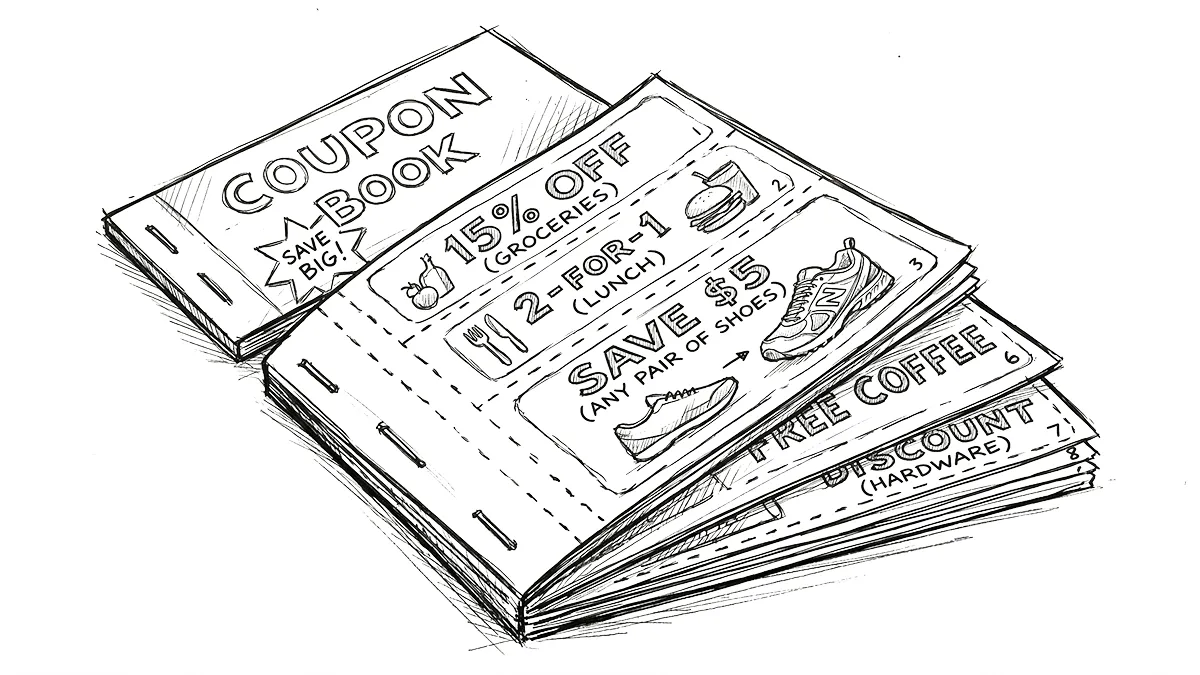
Now, let me say it clearly: we love coupons. I’ve clipped them myself. If you tell me I can save 15% on a new pair of running shoes, I’m not walking to checkout — I’m sprinting. But if my entire training plan relied only on discount sneakers, I’d be in trouble. That’s what an overreliance on coupon partners looks like. Great in the moment, but not enough to carry the distance.
Affiliate needs its closers, but it also needs its storytellers. It needs both the coupon at checkout and the Instagram creator who first put your product on someone’s radar. Together, they make a program that is both immediate and enduring.
Early Signs of Diversification
Even in this period, there were glimmers of what affiliate would eventually become. While coupons and creators drew the most attention, other partner types were quietly finding their place.
We began seeing card-linked offers, where consumers could earn rewards just by paying with a certain credit card. Closed benefit sites emerged, offering exclusive deals to employees, unions, or member communities. Paid search affiliates were experimenting with bidding strategies that complemented brand campaigns. And email partners were proving they could re-engage dormant customers on a performance basis.
These weren’t yet mainstream, but they hinted at something bigger: affiliate wasn’t destined to stay a siloed channel. It was evolving into a flexible payment model — one that could be applied across many types of digital marketing, from low-funnel conversion plays to upper-funnel awareness campaigns.
At JEBCommerce, we filed those lessons away. We knew that the future of affiliate wouldn’t just be about choosing between coupons or creators. It would be about stitching together a diverse ecosystem of partners that collectively covered the entire customer journey.
Lessons We Learned at JEBCommerce
The biggest lesson? Balance wins. Programs overloaded with coupons delivered volume but struggled with sustainability. Programs overloaded with creators looked good in branding decks but often lacked consistent conversion. The healthiest mix included both.
It also reinforced the importance of managing expectations. Brands had to be prepared for short-term dips when shifting spend. That’s why we built strategies that were deliberate and data-backed.
Looking Ahead
This period marked a turning point. It showed us that affiliate could no longer be treated as a discount channel. It could drive awareness, shape consideration, and build loyalty. But it required intentional recruitment, thoughtful incentives, and smarter measurement.
As Adam Weiss reminded us on the podcast:
“Affiliate earned its seat at the marketing table by proving it could do more than close the deal. The brands that got ahead recognized that early and invested accordingly.”
For JEBCommerce, this was a defining era. It reshaped how we manage programs and taught us lessons we still apply today: be balanced, be intentional, and never build your house on snacks alone.
Rebalancing a Coupon-Heavy Program
- Start with an honest audit. Break down revenue by partner type and identify where the weight lies.
- Set expectations upfront. Leadership needs to know that shifting spend to creators may temporarily slow revenue.
- Incentivize what matters. Use custom commission structures that reward new customers or higher LTV.
- Support creators properly. Provide assets, product samples, and collab opportunities.
- Measure beyond last-click. Look at acquisition rates, repeat purchase behavior, and lifetime value.
Chapter 4
Attribution & Technology Shifts (2016–2020)
If Chapter 3 was about diversifying partner types, Chapter 4 is about fixing how we measure and reward them. Because in the late 2010s, one truth became painfully clear: last-click attribution wasn’t cutting it anymore.
The Cracks in Last-Click
Last-click had always been the simplest way to credit sales: the last partner in the journey got the commission. Easy to track, easy to report. But simplicity came at a cost.
- Coupon and loyalty sites often captured credit at the finish line, even if awareness was sparked elsewhere.
- Content creators and social partners influenced purchase decisions earlier, but were under-credited.
- Finance teams grew skeptical of inflated ROI metrics when the measurement system itself was flawed.
Affiliate wasn’t alone in this struggle—digital marketing at large was wrestling with attribution. But because affiliate spend is directly tied to payouts, the pain was sharper here.
The Technology Shift
Networks and SaaS platforms began to respond. CJ, Rakuten, Impact, Partnerize, and others rolled out cross-device tracking, de-duplication rules, and dynamic commissioning tools. For the first time, advertisers could set rules like:
- Pay higher commissions for new-to-file customers.
- Bonus publishers who influence early-funnel engagement.
- Throttle commissions on margin-sensitive products.
These weren’t just features — they were a signal that affiliate was maturing. It wasn’t “just a discount channel.” It was a flexible, data-driven ecosystem.
JEBCommerce’s Approach
At JEBCommerce, we leaned hard into these tools. For clients, we designed custom commissioning structures to align payouts with strategic goals. For example:
A retailer struggling with discount reliance saw commissions shifted from pure coupons to a tiered structure rewarding new customers and higher-margin SKUs.
A subscription brand used dynamic commissioning to bonus partners that drove first-time trials versus repeat conversions.
A lifestyle brand piloted influence crediting, where top-of-funnel partners were paid partial commission for assisted conversions.
These weren’t always smooth transitions. There were tough conversations with partners. Some didn’t love seeing their commissions drop when credit was redistributed. But when framed transparently, many affiliates saw the upside: fairer rewards and longer-term sustainability.

Explaining attribution models to executives is a bit like trying to explain TikTok to your parents. Eyes glaze over, questions multiply, and someone inevitably says, “But why can’t we just keep it simple?” The answer is: because “simple” isn’t fair, and fairness drives growth.
Podcast Perspective
On the Profitable Performance Marketing podcast, one guest put it plainly:
“The minute we stopped treating every conversion as equal and started aligning payouts with value, the quality of our partner mix changed.”
That perspective resonated deeply with us. Incentives shape behavior. If you only reward finish-line closers, that’s the behavior you’ll get. If you reward full-funnel contribution, you’ll attract a healthier mix.
The Broader Impact
Attribution and technology changes didn’t just affect payouts—they changed the conversation with executives. Suddenly, affiliate leaders could walk into a boardroom and say:
- “Here’s the share of new customers we acquired through affiliate.”
- “Here’s the lift in lifetime value from this partner cohort.”
- “Here’s how we optimized commissions to protect margins while still growing revenue.”
Affiliate was no longer begging for a seat at the table. It was earning one by speaking the language of finance and strategy.
Lessons We Learned
Data is only useful if you act on it. New tools meant nothing unless programs restructured payouts.
Transparency builds buy-in. Partners respected clear rules, even if it meant change.
Attribution reform is never “done.” It’s iterative, and models evolve as partner types diversify.
Looking Ahead
The attribution and technology advances of this era set the stage for affiliate to truly break out of its silo. With better tools, fairer payouts, and stronger data storytelling, affiliate was no longer “the discount caboose.” It was becoming a channel — and eventually a payment model — capable of powering growth across the entire digital stack.
Aligning Commissions with Value
- Audit current payouts. Who’s getting rewarded, and for what role?
- Define value drivers. New-to-file, LTV, margin, category expansion.
- Pilot dynamic rules. Start with bonuses or throttles before a full restructure.
- Communicate clearly. Partners will push back less if they understand the why.
- Iterate quarterly. Attribution isn’t static—neither should your commissioning be.
Chapter 5
The Full Funnel Affiliate Ecosystem (2021–2025)
If the previous chapters were about fixing reputation, building fundamentals, and diversifying into creators, this chapter is about the big leap: affiliate breaking free of its silo and becoming a payment model for nearly the entire digital marketing stack.
By the early 2020s, it was no longer enough to think of affiliate as “coupons plus some content.” The channel had expanded into a multi-touch, full-funnel ecosystem spanning everything from cashback and loyalty to connected TV ads sold on a CPA basis.
From Channel to Payment Model
The old way of thinking: affiliate was a channel, sitting alongside paid search, display, and email. The new reality: affiliate became a commercial framework — a way of paying for performance that could be applied to many channels.
Lower funnel: Coupons, cashback, loyalty, Buy Now Pay Later (BNPL) platforms, card-linked offers.
Mid funnel: Closed benefit sites, email affiliates, niche publications, search partners.
Upper funnel: Content creators, social media influencers, display inventory, programmatic placements.
Top of funnel: Connected TV inventory offered on CPA through providers like tvScientific.
Suddenly, affiliate wasn’t just about who handed out the coupon at checkout. It was about every digital touchpoint where performance-based compensation could apply.
Industry Validation
The PMA’s 2024 Industry Study highlighted this diversification clearly. While coupon and loyalty remained important, spend share was increasingly distributed across partner categories. Retailers were experimenting with BNPL integrations. Financial services leaned into card-linked offers. Travel and telecom adopted closed benefit sites. And major brands piloted upper-funnel media buys under CPA terms.
The data told the story: affiliate had gone full funnel.

Think of affiliate’s evolution like a pantry makeover. For years, we stocked it with snacks (coupons). Then we added some proteins (content creators). Now, we’ve got the full grocery list: grains, produce, spices, even dessert. Suddenly, we’re not just surviving on chips — we’re cooking real meals.
JEBCommerce in the Modern Ecosystem
For us at JEBCommerce, this era meant guiding clients through diversification intentionally. We asked:
- Where are you over-reliant? (usually coupons)
- Where are you under-exposed? (often upper- and mid-funnel)
- What’s the risk tolerance for testing new models?
Case in point: A home goods brand came to us with 75% of affiliate revenue tied to coupons and loyalty. We introduced BNPL partners like Klarna and Afterpay to drive incremental shoppers. We added closed benefit sites that offered exclusive perks to targeted employee groups. We tested CTV placements on a CPA basis, opening the door to new audiences without requiring a massive upfront budget.
The results weren’t instant. But over 18 months, the brand’s affiliate channel shifted from a one-dimensional discount engine to a diversified, multi-touch growth driver.
Podcast Perspective
On the Profitable Performance Marketing podcast, a guest from a leading network put it this way:
“Affiliate has stopped being just a channel. It’s become a framework. If you can pay on a performance basis, affiliate can be the wrapper around it — whether that’s a coupon, an influencer, or a CTV ad.”
That quote captures the mindset shift perfectly.
Lessons Learned at JEBCommerce
Diversity builds resilience. Programs overly reliant on one partner type risk fragility.
Payment model is the lens. Stop asking “is this affiliate?” Start asking “can we pay for it on performance?”
Measurement evolves with scope. As the funnel expands, so must attribution models and KPIs.
Looking Ahead
The full-funnel era proved affiliate wasn’t boxed into discounts or content. It became the connective tissue across digital marketing, driven by a simple principle: pay for performance. And once brands embraced that mindset, the possibilities multiplied.
Building a Full-Funnel Affiliate Program
- Audit your mix. Identify concentration risks and underrepresented partner types.
- Define funnel roles. Assign partners to awareness, consideration, or conversion tiers.
- Incentivize accordingly. Closers get tight CPAs; introducers may need hybrids or bonuses.
- Test emerging models. Pilot BNPL, CTV, or card-linked offers in small doses.
- Measure incrementality. Track assisted conversions, cohort LTV, and net new reach.
Chapter 6
Data, Compliance, and Customization (2021–2025)
Diversification brought growth, but it also brought complexity. With more partner types, more touchpoints, and more consumer data in play, the industry faced new challenges: privacy regulations, compliance risks, and the need for customized strategies.
The Privacy Wave
Affiliate was not immune to global privacy changes. GDPR in Europe, CCPA in California, and iOS/Android tracking updates disrupted the cozy world of cookie-based attribution. Cross-device tracking became harder. Consumer data required stricter handling.
Brands had to ask: How do we prove value when tracking gets fuzzy? How do we stay compliant without slowing down performance?
The answer was a mix of better tools, smarter contracts, and stricter discipline. Networks improved consent frameworks. Agencies built privacy-first data practices. Brands leaned on clear disclosures and transparency.
Compliance as a Differentiator
Compliance wasn’t just about avoiding fines — it became a trust builder. The best programs held publishers accountable for:
- Proper FTC disclosures.
- Transparent traffic sourcing.
- Respecting brand guidelines.
- Adhering to promotion calendars and code governance.
At JEBCommerce, compliance became a selling point. When brands partnered with us, they knew their affiliate program wouldn’t just grow — it would hold up under scrutiny.
Explaining GDPR to a creative team is like explaining why your kids can’t have cookies before dinner. They nod, pretend to understand, then test the rule anyway. Enforcement matters.
Customization Becomes Essential
As partner diversity grew, so did the need for customized strategies. A one-size-fits-all commission plan no longer worked. Programs had to:
Adjust payouts by partner type. CTV might require hybrid deals. Content creators might need bonuses. Coupons still thrived on CPA.
Set category-specific rules. Margin-sensitive products got different treatment.
Incorporate lifecycle goals. Reward new-to-file and returning customers differently.
These layers of customization turned affiliate from a blunt instrument into a scalpel.
Podcast Perspective
On an episode of Profitable Performance Marketing, a guest summed it up:
“Affiliate used to be about volume at any cost. Today, it’s about precision — rewarding the right behavior, in the right context, for the right outcome.”
Lessons Learned at JEBCommerce
Compliance protects and builds trust. Both internally and with consumers.
Customization drives efficiency. Commission structures must reflect partner roles.
Privacy is non-negotiable. Programs that ignored it paid the price.
Looking Ahead
This era showed that growth and compliance aren’t opposites. In fact, they’re complementary. The programs that scaled best were the ones that treated compliance as strategy and customization as necessity. Affiliate had grown up and it showed.
Building a Compliant, Customized Program
- Audit privacy posture. Ensure GDPR/CCPA alignment and clean data flows.
- Set partner-level rules. Don’t pay everyone the same way. Align payouts to role.
- Enforce disclosures. Monitor FTC compliance regularly.
- Communicate contracts clearly. Don’t let publishers guess your boundaries.
- Review quarterly. Laws evolve. So must compliance and customization.
Chapter 7
Recognition & Resilience (2021–2025)
By the early 2020s, affiliate had not only grown in scope and sophistication — it had proven its resilience. In economic downturns, when budgets were tight and uncertainty was high, brands leaned more heavily on performance-driven channels. Affiliate rose to the occasion.
Affiliate as the Recession-Proof Channel
Multiple PMA studies during this time confirmed what practitioners already knew: affiliate spend kept climbing even as other budgets were trimmed. Why? Because the model was flexible and accountable. Brands only paid when outcomes occurred.
Compared to upfront-heavy channels like TV or even paid search, affiliate offered lower risk. In downturns, when CFOs were scrutinizing every dollar, affiliate was often one of the few areas where spend wasn’t just protected — it grew.
Industry Recognition
With growth and diversification came industry recognition. Affiliate wasn’t just the “discount caboose” anymore. It was winning awards, being covered by eMarketer and Forrester, and included in broader marketing ecosystem maps.
For JEBCommerce, this era was a highlight. We were recognized as Rakuten’s Agency of the Year in 2025, celebrated for the way we combined data-driven strategies, partner diversification, and strong client outcomes.
Recognition like this mattered. Not just for ego, but because it signaled a shift in how the channel was perceived. Affiliate was no longer a footnote. It was a headline.

Affiliate being compared to a cockroach might not sound flattering. But in a marketing world where shiny new things flame out fast, I’ll take resilient and adaptive any day.
Stories from the Field
One of my favorite examples came from a retailer navigating economic uncertainty in 2022. Marketing budgets were frozen, and the pressure to hit numbers was intense. Rather than cut affiliate, the brand doubled down.
Together, we restructured commissions to incentivize new-to-file customers, diversified into BNPL and closed benefit sites, and optimized placements with creators who could tell authentic product stories.
The results? While other channels stalled, affiliate delivered steady growth and became the brand’s most efficient acquisition engine during the downturn.
Podcast Perspective
On the Profitable Performance Marketing podcast, a guest remarked:
“Affiliate has always been the cockroach of digital marketing. It survives anything. Recessions, privacy changes, tech shifts — it adapts and comes out stronger.”
It was a funny line, but it carried truth. Resilience was affiliate’s superpower.
Lessons We Learned at JEBCommerce
Resilience wins trust. When affiliate delivered in tough times, the C-suite started to see it as essential.
Recognition builds credibility. Awards and industry coverage validated the work and helped win over skeptics.
Efficiency isn’t boring. In lean years, efficiency was sexy — and affiliate delivered it better than most.
Looking Ahead
This era cemented affiliate as not just a survivor, but a leader. With recognition, resilience, and results, the channel had finally earned its seat at the marketing table.
Building a Resilient Program
- Stress test your mix. Ask: if budgets freeze tomorrow, which partners deliver consistently?
- Align payouts to sustainability. Ensure commissions protect margins while driving goal-aligned outcomes.
- Diversify intentionally. Don’t let one partner type dominate.
- Measure and share resilience. Document affiliate’s performance during downturns to prove value.
- Celebrate wins. Recognition amplifies credibility internally and externally.
Chapter 8
AI, Automation, & Predictive Affiliate Management (2026 and Beyond)
If the past decade was about diversification and recognition, the next decade will be about acceleration. Emerging technologies — especially artificial intelligence — are reshaping how affiliate programs are managed, optimized, and scaled.
AI Arrives in Affiliate
AI isn’t new to marketing, but its application to affiliate is still unfolding. Already, we’re seeing the following:
- Predictive publisher scoring. Machine learning models can forecast which partners are most likely to drive incremental sales.
- Fraud detection. AI systems scan traffic and conversions in real-time to flag anomalies.
- Dynamic commissioning. Tools that adjust payouts automatically based on performance signals.
- Content personalization. AI-driven recommendations ensuring the right offer reaches the right audience at the right time.
These tools promise to reduce manual work, increase efficiency, and unlock new opportunities. But they also raise questions about transparency, trust, and human oversight.
JEBCommerce’s Early Experiments
At JEBCommerce, we’ve begun testing AI-driven tools in pilot programs. For example:
- Using AI to flag high-risk affiliates before onboarding.
- Running predictive models to identify which new creators are likely to drive higher LTV customers.
- Automating parts of reporting to free up human time for strategy.
The results are promising, but we’ve also learned that AI isn’t a magic switch. It’s a tool that needs human guidance. Garbage in, garbage out still applies.

AI may be able to write an email to a publisher faster than I can. But can it remember to ask about their kid’s soccer game? That’s still our job. Relationships remain human at their core.
Industry Perspective
On the Profitable Performance Marketing podcast, Cary Pierce summed it up:
“AI won’t replace affiliate managers. But affiliate managers who use AI will replace those who don’t.”
That line sticks with me. AI isn’t here to take jobs — it’s here to make good managers better.
Challenges Ahead
Data quality. AI is only as good as the inputs. Dirty data = bad predictions.
Transparency. Partners want to know how decisions are made. Black-box models can erode trust.
Ethics. Using consumer data responsibly is critical, especially under stricter privacy laws.
Lessons We’re Learning
AI amplifies, it doesn’t replace. Human judgment remains essential.
Transparency is non-negotiable. Brands and partners need to understand the logic behind decisions.
Start small, scale smart. Pilots and phased rollouts work better than wholesale adoption.
Looking Ahead
AI will reshape affiliate, no doubt. But the future isn’t machines versus humans. It’s machines and humans working together — leveraging the best of both. The agencies and brands that strike that balance will define the next chapter of performance marketing.
Preparing for AI in Affiliate
- Clean your data. Invest in hygiene before layering AI on top.
- Pilot specific use cases. Fraud detection, predictive scoring, or reporting — not everything at once.
- Maintain human oversight. Keep managers in the loop for final decisions.
- Communicate openly. Share how AI is used with partners to maintain trust.
- Iterate continuously. AI evolves; your approach must too.
Chapter 9
Creator Commerce, Global Expansion & Regulation (2026 & Beyond)
The final evolution of affiliate isn’t just about technology — it’s about scope. As we look ahead, three forces will shape the channel: creator commerce, global expansion, and regulation.
Creator Commerce Comes of Age
Creators aren’t new to affiliate, but their role is expanding fast. What began as sponsored posts and product seeding has matured into structured, performance-driven partnerships where creators function as micro-retailers.
Shoppable content. TikTok, Instagram, and YouTube now blur content and commerce with built-in affiliate links.
Live shopping. Influencers host live streams where purchases are tracked and credited in real-time.
Affiliate-first creators. Some influencers now build their businesses primarily on affiliate revenue rather than flat fees.
For brands, creator commerce offers scale, authenticity, and measurable performance — but only if programs adapt. Commission structures must account for creators’ influence beyond last-click, and relationships must be managed with the same rigor as traditional affiliates.
Global Expansion
Affiliate is no longer just a North American or European story. Growth in Asia-Pacific, Latin America, and emerging markets is accelerating, driven by:
- Expanding eCommerce adoption.
- Local networks and platforms offering region-specific solutions.
- Cross-border affiliate opportunities, where brands sell internationally through localized partners.
Global expansion requires flexibility. Commission structures, compliance standards, and partner types vary by market. What works in the U.S. may not fit neatly in Brazil, India, or Japan. But the opportunity is enormous — affiliate spend globally is projected to continue double-digit growth into the 2030s.

Working with global creators sometimes feels like scheduling a family Zoom call across five time zones. Confusing, exhausting, but absolutely worth it when everyone shows up and the magic happens.
The Regulatory Wave
With growth comes scrutiny. Regulators are paying closer attention to affiliate, creators, and performance marketing. Three areas stand out:
- Disclosure enforcement. FTC and international equivalents are cracking down on influencers and affiliates who don’t disclose properly.
- Data privacy. As privacy laws evolve, compliance requirements will only increase.
- Competition concerns. As major networks and platforms consolidate, antitrust discussions may arise.
Affiliate’s future success depends on operating with transparency and responsibility.
JEBCommerce’s Role
For JEBCommerce, the future means helping brands:
- Expand globally without losing compliance discipline.
- Build creator-first affiliate programs that balance authenticity and accountability.
- Stay ahead of regulatory change by embedding compliance as strategy, not afterthought.
Podcast Perspective
On the Profitable Performance Marketing podcast, one global affiliate leader said:
“The future isn’t about whether affiliate matters. It’s about whether you can manage it responsibly at scale — across creators, across borders, across laws. That’s the challenge, and the opportunity.”
Lessons Learned
Creators are the new retailers. Treat them with the same strategic respect.
Global means nuance. One-size-fits-all strategies rarely succeed abroad.
Regulation is rising. Agencies and brands that embrace compliance will thrive.
Looking Ahead
Affiliate’s future isn’t just bigger — it’s broader, more complex, and more integrated into every aspect of digital marketing. The challenge will be managing that growth responsibly. The reward will be a channel that continues to prove its value across decades.
Preparing for the Next Decade
- Invest in creator commerce. Build infrastructure for shoppable content and live shopping.
- Plan for global growth. Understand local networks, laws, and consumer behavior.
- Prioritize compliance. Treat disclosures and data privacy as core strategy.
- Diversify intentionally. Balance creators, traditional affiliates, and new partner types.
- Stay agile. The next disruption — platform, law, or partner type — is always right around the corner.
Conclusion
Affiliate's Enduring Strength
Affiliate marketing has traveled a long way from its messy beginnings. From the early days of coupon dominance and reputation challenges, to the structured fundamentals of the 2010s, to the diversification and full-funnel expansion of the 2020s, the channel has evolved — and thrived.
At its heart, affiliate has always been about one simple but powerful idea: pay for performance. That idea has survived fraud scandals, privacy changes, economic downturns, and waves of skepticism. It has adapted to new partner types, new technologies, and new global markets. And it remains one of the most accountable and resilient models in digital marketing.
For JEBCommerce, the journey has mirrored the industry’s arc. Founded in 2004 by Jamie Birch to bring strategy and transparency to a messy space, and re-energized in recent years with a renewed focus on diversification, compliance, and innovation, our agency has seen firsthand the enduring strength of affiliate.
As I reflect on my own path — entering digital marketing in 2010, joining JEBCommerce in 2020, and leading through the changes of the past five years — one thing is clear: affiliate isn’t just surviving. It’s shaping the future of digital commerce.
Final Thought
The next decade will bring creators, AI, global markets, and regulatory challenges. But affiliate’s core strength — accountability, adaptability, and resilience — will carry it forward.
For brands willing to invest thoughtfully, for partners eager to innovate, and for agencies committed to doing the hard, strategic work, affiliate will continue to be one of the most effective and exciting ways to grow.