Affiliate program migrations tend to get simplified into one sentence: “Just move to a new network.” In reality, that’s about as accurate as saying a website redesign is just “launching a new homepage.”
What’s actually happening underneath is far more complex, and if not handled properly, it can disrupt revenue, partner relationships, and months (or years) of progress.
At JEBCommerce, we’ve led and seen migrations across every major affiliate network over the past 20+ years. Some have driven immediate growth. Others required careful recovery after being rushed or under-resourced.
The difference between those outcomes is rarely the platform itself. It’s the process, and the team managing it.
Why Brands Migrate in the First Place
Affiliate migrations don’t happen randomly. They’re usually driven by a specific need that the current setup can no longer support.
Sometimes it’s about scale, brands outgrowing their current network and needing more advanced tools or global reach. Other times it’s about efficiency, better tracking, or access to a different mix of partners.
In some cases, it’s simply timing. Industry shifts, internal changes, or broader strategic decisions can force a reevaluation of where a program should live.
Whatever the reason, the important thing to understand is this: A migration is not just a technical move. It’s a strategic reset.
And that reset only works if it’s approached intentionally.
The Modern Migration Is More Complex Than It Used to Be
Years ago, affiliate programs were simpler. Fewer partners, less reliance on deep integrations, and more flexibility in how programs were managed.
That’s not the case anymore. Today’s affiliate programs are deeply connected to:
- Attribution models
- Paid media strategies
- Influencer and content ecosystems
- CRM and customer data flows
Which means a migration now impacts far more than just the affiliate channel itself.
You’re not just moving platforms, you’re moving:
- Data
- Relationships
- Revenue streams
- And performance momentum
That’s why modern migrations require a much more structured and experienced approach.
What a Full Affiliate Migration Actually Involves
From the outside, a migration might look like a platform switch. From the inside, it’s a multi-phase operational effort that touches nearly every part of the program.
1. Discovery & Strategic Planning
Before anything moves, there needs to be a clear understanding of what exists today, and what needs to exist tomorrow.
This includes:
- Historical performance analysis
- Partner segmentation and dependency mapping
- Commission and margin structure review
- Contractual obligations with the current network
- Internal technical and resource assessment
Skipping or rushing this step is one of the fastest ways to create problems later.
2. Network Selection & Alignment
Choosing the next platform isn’t about picking the “best” network, it’s about choosing the right one for your goals. That might be Impact.com for one brand, AWIN for another, or CJ Affiliate depending on the model.
Each network has strengths. The key is aligning those strengths with:
- Your growth strategy
- Your partner mix
- Your operational capabilities
This is where experience across multiple platforms becomes critical.
3. Technical Setup & Tracking Validation
Once a network is selected, the technical foundation needs to be built correctly from day one.
This includes:
- Tag implementation and testing
- Conversion tracking validation
- Attribution setup and QA
- Integration with internal systems where needed
If this step is rushed or misconfigured, it can create long-term reporting and performance issues that are difficult to unwind.
4. Partner Migration & Communication
This is where most migrations succeed … or fail.
Your affiliate program isn’t just a platform. It’s a network of relationships. Every partner needs to:
- Be informed of the transition
- Re-contract or re-join on the new platform
- Update links, tracking, and placements
- Re-engage with the program
Handled well, this can strengthen relationships. Handled poorly, it can lead to lost partners and stalled revenue.
5. Launch & Stabilization
Going live is not the finish line, it’s the beginning of the next phase. After launch, the focus shifts to:
- Monitoring tracking accuracy
- Re-activating key partners
- Addressing gaps in coverage
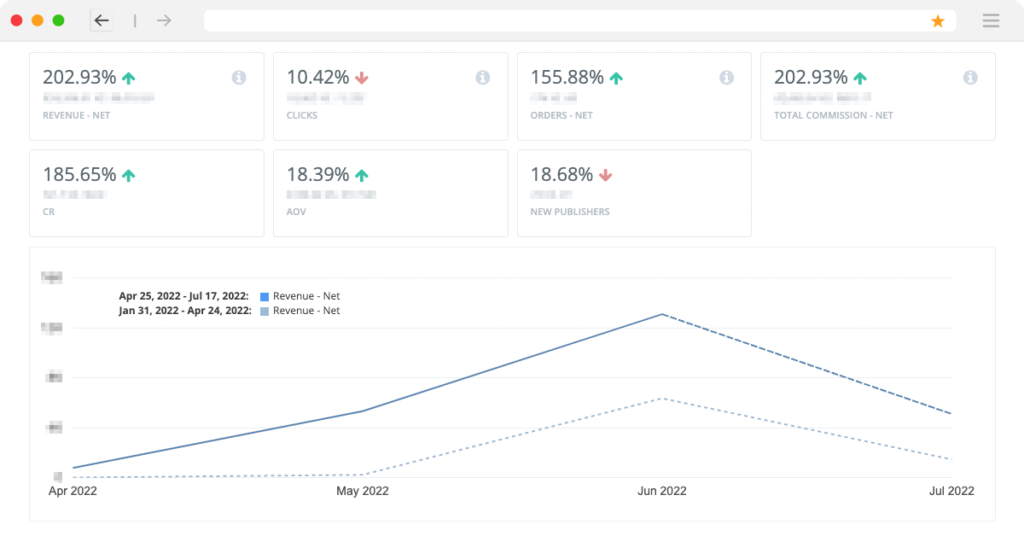
- Ensuring performance returns to (or exceeds) baseline
This phase is where momentum is either regained … or lost.
Setting Real Expectations: Timeline & Lift
One of the most common misconceptions around affiliate migrations is how long they take. In reality, most well-executed migrations require 60-90+ days from start to full stabilization.
That timeline accounts for:
- Planning and setup
- Partner transitions
- Tracking validation
- Performance recovery
Could it move faster? In certain cases, yes.
But when migrations are rushed, they often don’t truly “complete.” Instead, they drag on; partners fall off, tracking gaps persist, and parts of the program never fully recover.
What starts as a quick transition can quietly turn into months of rebuilding. Setting the right expectations upfront is one of the most important parts of doing this well.
Where Migrations Go Wrong
Most migration challenges don’t come from the platform. They come from the approach. Common pitfalls include:
- Treating the migration as a technical task instead of a strategic one
- Underestimating the partner communication required
- Rushing timelines without proper planning
- Assuming the network will manage more than it actually does
- Not allocating sufficient internal or external resources
Each of these can create friction. Combined, they can derail progress entirely.
Why the Right Team Makes the Difference
At its core, an affiliate migration is a coordination challenge. It requires alignment between:
- Strategy
- Technology
- Partnerships
- Execution
That’s why the team leading the effort matters as much, if not more, than the platform itself.
At JEBCommerce, we’ve built our approach around this reality.
- We actively manage programs across seven major affiliate networks
- We hold certified agency status with platforms like impact.com, CJ Affiliate, Awin, and Rakuten Advertising
- We’ve partnered on co-branded case studies across multiple networks:
- And we’ve been recognized as Agency of the Year (2025) by Rakuten Advertising
More importantly, we’ve seen migrations from every angle: what works, what breaks, and how to build a process that protects performance while creating new growth opportunities.
Final Thought
A network migration can be one of the most impactful moves a brand makes within the affiliate channel.
But it’s not something to rush or to simplify.
Handled with the right strategy and execution, it can unlock growth, improve efficiency, and strengthen your program for the long term.
Handled without that foundation, it can create months of disruption and lost momentum.
The difference is rarely the platform. It’s the plan and the team behind it.
Considering a Migration?
If you’re evaluating a network change, or simply trying to understand what it would involve, we’re always open to sharing perspectives.
No pressure. Just experience.